Skip to content
How OWCP Clinics Coordinate With Employers

Picture this: You’ve been hurt on the job. Maybe it was a bad fall, or years of repetitive strain that finally caught up with you, or one of those freak accidents that nobody sees coming. You’re in pain, you’re worried, and somewhere underneath all of that – if you’re being honest – there’s this quiet, nagging fear. *Will I still have a job when this is over? Does anyone actually know what’s going on with my case? Is anyone talking to anyone?*
That last question? It’s more important than most people realize.
Here’s something that surprises a lot of workers when they first step into the world of federal workers’ compensation: getting medical treatment through an OWCP-authorized clinic isn’t like going to your regular doctor. It’s not a one-way street where you get treated and everyone goes home. There’s an entire coordination process happening behind the scenes – between your clinic, your employer, and the Office of Workers’ Compensation Programs – and honestly, whether that process runs smoothly or falls apart can shape the entire trajectory of your recovery. And your career.
We don’t talk about this enough.
Why Most Workers Feel Left in the Dark
Most people who’ve navigated a federal workers’ comp claim will tell you the same thing. The medical side? Fine, they handled that. But the communication piece – who’s telling their agency what, when, and in what format – felt like a black box. Forms would disappear into some bureaucratic void. Their supervisor would seem to have no idea what restrictions they were working under. Return-to-work timing would get confused, delayed, or just… not communicated at all.
And that’s frustrating, because it doesn’t have to be that way. When an OWCP clinic actually coordinates well with an employer – when those lines of communication are clear and consistent – the whole thing works so much better. Workers heal faster. Disputes get resolved before they turn into nightmares. Modified duty gets set up in a way that actually makes sense for everyone involved.
The difference between a clinic that understands this coordination process and one that doesn’t? It can mean months of your life.
This Actually Affects You More Than You Might Think
If you’re a federal employee – or you supervise people who are – you’ve probably got a stake in understanding how this works. Maybe you’re currently going through a claim and wondering why communication feels so fragmented. Maybe you’re a supervisor who genuinely wants to support an injured employee but doesn’t know what information you’re supposed to receive, or when. Maybe you’re in HR, trying to piece together a return-to-work plan with half the information you need.
Or maybe – and this is more common than people admit – you’ve already been through the process once, something went sideways with the coordination, and you’re trying to figure out what actually should have happened.
All of that is valid. And all of it is exactly why this topic matters.
What We’re Going to Walk Through
In the rest of this article, we’re going to pull back the curtain on how OWCP clinics are supposed to coordinate with employers, and – just as importantly – what that looks like in practice. We’ll talk about the specific documentation that moves between a clinic and an employing agency, why work capacity evaluations are such a critical piece of the puzzle, and how the return-to-work process actually gets structured when everyone’s doing their job right.
We’ll also get into what happens when coordination breaks down – because it does, sometimes – and what that means for injured workers who are caught in the middle.
This isn’t going to be a dry policy rundown. You don’t need another document full of bureaucratic language that tells you nothing useful. What you need is a clear, honest picture of how this system is supposed to function, so you can advocate for yourself, ask better questions, and understand what’s happening in your case.
Because here’s the thing – you’re not just a claim number. You’re someone who got hurt doing your job, and you deserve to understand the process that’s supposed to get you better and back to your life. The more you know about how your clinic and your employer are supposed to be working together, the better positioned you are to make sure they actually do.
So let’s get into it.
The Basic Framework (And Why It’s More Complicated Than It Sounds)
Here’s the thing about workers’ compensation – most people assume it’s a pretty straightforward system. You get hurt, you see a doctor, you get better, you go back to work. Clean, linear, done. But anyone who’s actually been through it knows that’s about as accurate as saying “cooking is just putting food in your mouth.” The reality involves multiple parties, overlapping responsibilities, and a coordination dance that can feel genuinely confusing even for people who work in it every day.
So let’s back up and talk about what OWCP clinics actually are and how they fit into the bigger picture.
What Makes an OWCP Clinic Different
OWCP stands for the Office of Workers’ Compensation Programs – the federal agency that oversees compensation for federal employees who get injured on the job. An OWCP-authorized clinic isn’t just any medical practice. It’s a provider that’s been approved to treat patients under this specific program, which means they understand the documentation requirements, the billing codes, the treatment timelines, and – critically – the coordination protocols that workers’ comp demands.
Think of it like the difference between a restaurant that accepts a specific corporate dining card versus one that doesn’t. You could technically eat anywhere, but only certain places have agreed to work within the system, speak the language, and follow the rules. OWCP clinics have made that agreement.
This matters more than it might seem at first. A standard primary care doctor, even a great one, might not know that a particular form needs to be filed within a specific window, or that a functional capacity evaluation needs to happen before certain return-to-work conversations can begin. Small gaps in that knowledge can delay claims, create disputes, or leave injured workers in genuinely frustrating limbo.
The Three-Way Relationship
Here’s where it gets interesting – and honestly, a little counterintuitive. Most people think of medical care as a two-way relationship: you and your doctor. Workers’ comp introduces a third party into that dynamic: the employer. And sometimes a fourth – the insurance carrier or claims examiner.
That’s not comfortable for everyone to hear. There’s something that feels odd about your employer being involved in your medical situation. But it’s worth understanding *why* this structure exists, because it actually serves a real purpose.
When someone is injured at work, the employer has legitimate interests beyond just paying bills. They need to understand work restrictions so they can modify duties appropriately. They need documentation to comply with their own safety regulations. They need timelines so they can plan staffing. None of that is inherently adversarial – though it can certainly feel that way if the communication breaks down, which… it often does.
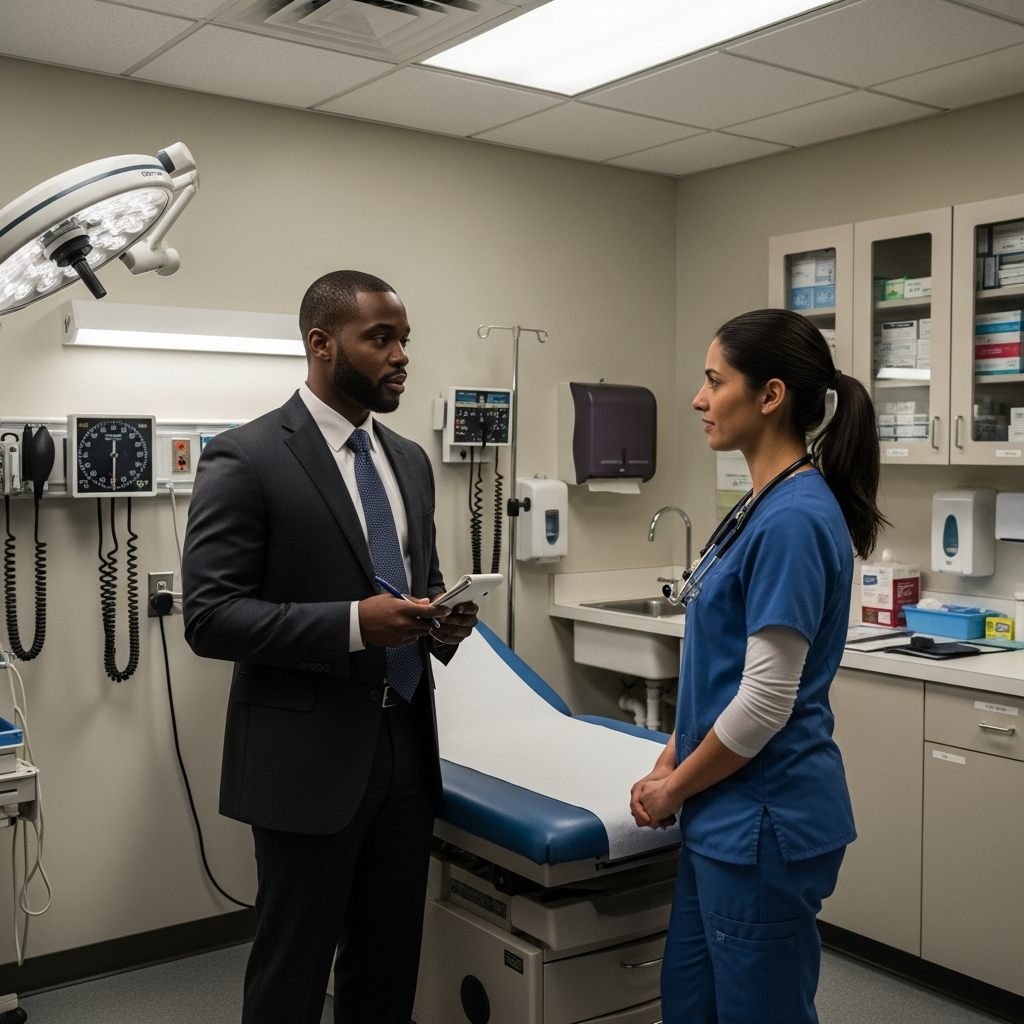
The OWCP clinic sits in the middle of this triangle. Their job is to provide excellent medical care while also generating the specific documentation that keeps the whole system moving. Medical records, work status reports, functional limitations, treatment plans – these aren’t just paperwork for the sake of paperwork. They’re the connective tissue between the clinic and the employer.
Work Status Reports – The Main Communication Tool
If there’s one document that does the heaviest lifting in employer-clinic coordination, it’s the work status report (sometimes called a duty status report or return-to-work form, depending on the agency). This is the formal mechanism by which a treating physician communicates what an injured worker can and can’t do.
It sounds simple. It’s not, really. A good work status report isn’t just “patient can’t work” or “patient is cleared for full duty.” It describes specific functional limitations – can the employee sit for extended periods? Lift more than 20 pounds? Work in certain environmental conditions? That granularity is what allows an employer to make meaningful accommodation decisions rather than just defaulting to “you can’t come back until you’re 100%.” Which, for some injuries, might mean never.
The Role of the Claims Examiner
Actually, this is worth mentioning because a lot of people forget this piece entirely. Between the clinic and the employer, there’s often a claims examiner – the person at OWCP who’s managing the actual compensation case. They’re reviewing medical documentation, approving or questioning treatment plans, and making determinations about what’s covered.
The clinic communicates with the claims examiner. The examiner communicates with the employer. Sometimes these conversations happen simultaneously, sometimes sequentially. It’s less like a clean relay race and more like a group text where not everyone is reading every message – which is exactly why standardized protocols matter so much.
Get the Right People in the Same Room (Even Virtually)
One of the biggest mistakes injured workers and employers both make is assuming the clinic will handle all the coordination automatically. It won’t – or at least, not as well as it could without a little push from your end. The single most effective thing you can employer or a workers’ comp case manager can do early on is request a three-way communication setup: you, the treating physician, and the employer’s designated return-to-work coordinator, all looped into the same updates.
Ask the clinic directly: “Who is your designated OWCP liaison?” Most established clinics have one. If they look at you blankly… that tells you something important about whether this clinic has real experience with federal workers’ comp cases.
Know What a Work Status Report Actually Does
The CA-17 form – that’s the Attending Physician’s Report of Workability – is essentially the document that drives everything. It tells the employer what you can and cannot do, in specific physical terms. The problem? Doctors often fill these out in vague language, and vague language gets interpreted in ways that don’t serve the injured worker.
When you’re at your appointment, don’t just hand the form to the doctor and walk out. Walk through it with them. If your job requires standing for six hours but your injury limits you to two, that needs to be stated explicitly – not just “light duty.” Specificity protects you. Specificity also gives the employer something concrete to work with when they’re trying to construct a modified duty position.
Create Your Own Paper Trail (Don’t Rely on Anyone Else’s)
Here’s something clinics won’t always tell you: the OWCP system is slow, documents get lost, and fax machines still exist in this world somehow. So do this for yourself.
Every time the clinic sends anything to your employer or to the Department of Labor, ask for a copy. Keep a running folder – physical or digital, doesn’t matter – with every CA-17, every treatment note, every referral. Date everything. If you have a phone conversation with a case manager, follow up with an email summarizing what was discussed. “Just confirming our conversation today – you mentioned the employer has a modified duty position available starting the 14th…” That kind of documentation has saved workers from nightmare disputes down the road.
Actually, this tip applies double if there’s any question about whether your employer is genuinely trying to accommodate you or just going through the motions.
Push for Functional Capacity Specifics, Not Just Diagnoses
Employers – HR departments especially – don’t really know what to do with a diagnosis. “Lumbar strain” doesn’t tell them whether you can sit at a desk, drive a government vehicle, or lift a mail bin. What they need is functional language, and good OWCP clinics know how to translate medical findings into workplace terms.
If your clinic hasn’t proactively communicated functional limitations in job-specific terms, ask them to. Some clinics will even coordinate directly with occupational health specialists to map your restrictions against your specific position description. That GS-7 mail handler position has a very different physical profile than a GS-12 program analyst role – the clinic should know the difference and document accordingly.
Use the Nurse Case Manager as an Actual Resource
If OWCP has assigned a nurse case manager (NCM) to your claim, a lot of people treat them with suspicion – understandably so, since they’re technically working for the government. But here’s the thing: a good NCM can be enormously useful for cutting through coordination delays. They can get the employer and treating physician talking faster than almost any other mechanism.
Don’t freeze them out. Bring them into appointments when appropriate. Ask them to help clarify what modified duty options actually exist. Their job, technically, is to facilitate your return to work – hold them to that.
When the Employer Says “No Modified Duty Available”
This happens more than it should. When it does, go back to your clinic immediately and make sure that response is documented in your file. The treating physician may need to issue a total disability status on the CA-17, which has significant implications for your wage loss compensation.
Don’t accept a verbal “sorry, nothing available” and let it float. Get it in writing. Then let your clinic and, if you have one, your OWCP attorney or representative know right away. The paper trail you’ve been building? This is exactly when it earns its keep.
When Communication Breaks Down (And It Will)
Here’s something nobody tells you upfront: even well-intentioned coordination efforts fall apart sometimes. Not because people are malicious – usually it’s just competing priorities, unclear expectations, or a simple game of telephone where information gets distorted somewhere between the clinic, the adjuster, and the employer’s HR department.
The most common culprit? Documentation delays. A treating physician submits work status notes on a Tuesday. The employer needs them by Monday to process modified duty assignments. The adjuster is waiting on clarification before approving the next treatment. Everyone’s stuck, and the injured worker is caught in the middle wondering why nothing is moving.
The fix isn’t glamorous, but it works: establish a single point of contact at each organization *before* you need one. Not “someone in HR” – an actual named person with a direct phone number. When there’s a delay, you’re calling Marcia, not a department.
The Modified Duty Mismatch Problem
This one trips people up constantly. The clinic releases an employee with restrictions – say, no lifting over 15 pounds, limited standing to two hours at a time. Reasonable, specific, clear. Then those restrictions land at the employer and… nothing happens, or worse, the modified duty assignment offered technically violates them in three different ways.
It’s not always bad faith. Sometimes supervisors genuinely don’t understand what “sedentary work” means medically. Sometimes the available light-duty jobs just don’t fit. But sometimes – and let’s be honest – there’s pressure to get workers back on the floor before they’re ready.
OWCP clinics can push back here by requesting written confirmation that the modified duty role has been reviewed against the medical restrictions. Not verbal assurances. Written. Actually, this matters more than almost anything else in the process – a paper trail protects the worker, the employer *and* the clinic if things go sideways later.
Employer Skepticism (The Elephant in the Room)
Some employers arrive at this process with suspicion baked in. They’ve had claims they believed were fraudulent. They’re watching costs. They’re wondering if the treating physician is really acting in everyone’s interest or just the worker’s…
That skepticism isn’t always unfair. But it creates friction that slows everything down and makes injured workers feel like suspects rather than patients.
The honest solution here is transparency from the clinic’s side – consistent, proactive communication that doesn’t leave room for doubt. When physicians explain *why* they’re recommending a certain restriction or treatment timeline, rather than just issuing directives, employers tend to trust the process more. It humanizes what otherwise feels like bureaucratic pronouncements from on high.
This doesn’t mean the clinic advocates for the employer over the patient. It never should. But explaining the reasoning? That’s just good communication.
When the Injured Worker Gets Lost in the Shuffle
Here’s what breaks my heart a little: sometimes everyone’s coordinating beautifully – clinic, employer, adjuster – and the actual injured person has no idea what’s happening with their own case. They’re getting conflicting information, they’re not sure what their rights are, they don’t know if they should be going back to work yet or not.
OWCP coordination should *include* the worker, not just happen around them. That means
– Clear explanations of every work status note in plain language – A direct line to ask questions – a real one, not a general voicemail – Honest conversations about what’s realistic in terms of recovery timelines
It sounds obvious. You’d be surprised how often it gets skipped.
Navigating Disputes Between Medical Findings and Employer Expectations
Sometimes the employer’s occupational health team or their independent medical examiner disagrees with the treating physician’s assessment. This creates a standoff that can feel impossible to resolve from where the worker is standing.
Clinics that handle this well don’t get defensive – they document thoroughly, communicate clearly, and know when to involve OWCP directly to request dispute resolution. Trying to fight it out informally, over email, between two doctors who’ve never met? That rarely ends well for anyone.
The paperwork matters here. Every conversation documented. Every recommendation in writing. Not because you’re expecting a legal battle – but because clarity is protection, and protection matters when things get complicated.
At the end of the day, most of these challenges trace back to the same root: assumptions replacing communication. The more explicit everyone can be – the clinic, the employer, the adjuster – the fewer gaps there are for things to fall through.
What to Actually Expect (And When to Expect It)
Let’s be honest with you for a second – this process takes longer than most people want it to. That’s not a failure of the system, necessarily, it’s just the reality of coordinating between medical providers, employers, and a federal workers’ compensation program that handles an enormous volume of cases. Going in with realistic expectations isn’t pessimistic. It’s actually one of the best things you can do for your own stress levels.
So here’s what “normal” usually looks like.
The First Few Weeks Are Mostly Paperwork
Frustrating? Yes. Unavoidable? Also yes. After your initial evaluation, your OWCP clinic will generate medical documentation, submit treatment plans, and begin the back-and-forth communication with your employer’s designated representative. Your employer, meanwhile, has their own internal processes – HR needs to be notified, supervisors loop in, and someone has to formally acknowledge the claim on their end.
Most people expect things to move fast at this stage and feel alarmed when they don’t. But two to three weeks of what feels like “nothing happening” is completely normal. Things are happening – they’re just happening in inboxes and file systems you don’t have visibility into.
If you haven’t heard anything by week three or four, that’s a reasonable time to follow up. Not before.
Your Employer’s Role Is Bigger Than You Might Think
Here’s something that surprises a lot of people: your employer isn’t just a passive bystander in this process. They’re actively involved in coordinating your care, and that coordination can shape your treatment timeline in real ways.
Your clinic will typically send work status reports – sometimes called CA-17 forms – that outline what you can and can’t do physically. Your employer then has to determine whether they can accommodate those restrictions. Sometimes they can offer modified duty. Sometimes they genuinely can’t. That determination affects everything from your return-to-work timeline to how your compensation is calculated.
This back-and-forth can take time. Especially if your employer is a large agency with multiple layers of approval. It’s not personal – it’s logistics.
Treatment Authorization Doesn’t Always Come Quickly
One of the more frustrating realities of the OWCP process is that some treatments require pre-authorization before your clinic can proceed. Physical therapy, specialist referrals, certain diagnostic tests – these often need to be approved through the Department of Labor before you can actually get them scheduled.
Authorization requests can take anywhere from a few days to several weeks, depending on the complexity of the case and current processing volumes. Your clinic’s job is to make those requests with strong medical justification to give each one the best chance of moving quickly. But there’s a waiting period built into the system, and it’s worth knowing that going in.
This is also why communication with your clinic matters so much. If you’re not hearing back about a referral, ask. Sometimes things get stuck, and a simple follow-up call can shake something loose.
What “Coordination” Actually Looks Like Day to Day
You might picture this coordinated, seamless flow of information between your clinic and your employer. The reality is a little more… human than that. Phone calls sometimes get missed. Fax confirmations (yes, still faxes – federal systems love their faxes) need to be tracked. Records requests need follow-up.
A good OWCP clinic keeps meticulous documentation of all of this, precisely because things do fall through cracks sometimes. If you ever feel like communication has stalled, it’s completely reasonable to ask your clinic coordinator for an update on where things stand. You’re not being a nuisance. You’re advocating for yourself.
Your Next Steps, Practically Speaking
Once your care is underway, your main focus should be showing up – to your appointments, to modified duty if it’s offered, and to any functional capacity evaluations that get scheduled. Consistency in your participation actually matters for your case, not just your recovery.
Keep a simple log of your appointments, any communications you receive, and how your symptoms are progressing week to week. Nothing elaborate – even just notes on your phone. If anything ever gets disputed down the line, that kind of personal record can be genuinely useful.
And give yourself some grace with the timeline. People often recover more gradually than they hoped, and the administrative process moves more slowly than they’d like. Both of those things can be true at once – and neither one means something has gone wrong.
There’s something genuinely reassuring about knowing that when a workplace injury happens, the system doesn’t have to feel like a maze you’re navigating alone. The coordination that happens behind the scenes – between your clinic, your employer, and the OWCP process – is designed to work *for* you, even when it doesn’t always feel that way.
And look, we know it doesn’t always feel that way.
Paperwork piles up. Phone calls go unanswered. You’re trying to heal while simultaneously wondering if your claim is moving forward, if your employer is getting the right updates, if anyone is actually talking to each other on your behalf. That kind of uncertainty is exhausting – and it’s completely valid to feel overwhelmed by it.
But here’s what good coordination actually looks like when it’s working well: your medical team understands the functional demands of your specific job. Your employer receives the right documentation at the right time – not too vague, not overreaching. Your return-to-work timeline is built around *your* actual recovery, not some generic checklist. It’s a lot of moving parts, honestly, but when those parts are aligned, the whole process becomes something you can actually get through.
You Don’t Have to Figure This Out Alone
The workers’ compensation system has its own language, its own timelines, its own unwritten rules. Most people don’t learn that language until they’re already in the middle of a claim, already stressed, already injured. That’s… not ideal. And it’s exactly why having a clinic that’s done this before – that knows the protocols, understands employer communication requirements, and can advocate clearly within the OWCP framework – makes such a meaningful difference.
Think of it like having someone who knows the neighborhood give you directions, versus trying to read a map upside down in the dark.
Your Recovery Matters More Than the Paperwork
It’s easy to lose sight of this when you’re deep in documentation and status updates, but your health is still the center of all of this. The coordination, the employer communication, the functional capacity notes – it all exists to support one thing: getting you better and helping you return to your life. That’s the whole point.
So if you’re feeling confused about where your claim stands, unsure whether your employer is receiving the right information, or simply wondering whether you’re at the right clinic for this kind of specialized care… that’s worth a conversation.
We’re here. And reaching out doesn’t mean you’re committing to anything – it just means you’re getting some clarity, which you absolutely deserve.
Whether you’re just starting the OWCP process or you’ve been in it for a while and something feels off, our team is genuinely happy to talk through your situation, answer your questions honestly, and help you understand your options. No pressure, no confusing medical jargon, no runaround.
Just a real conversation with people who understand what you’re going through – and who know how to help you move forward.